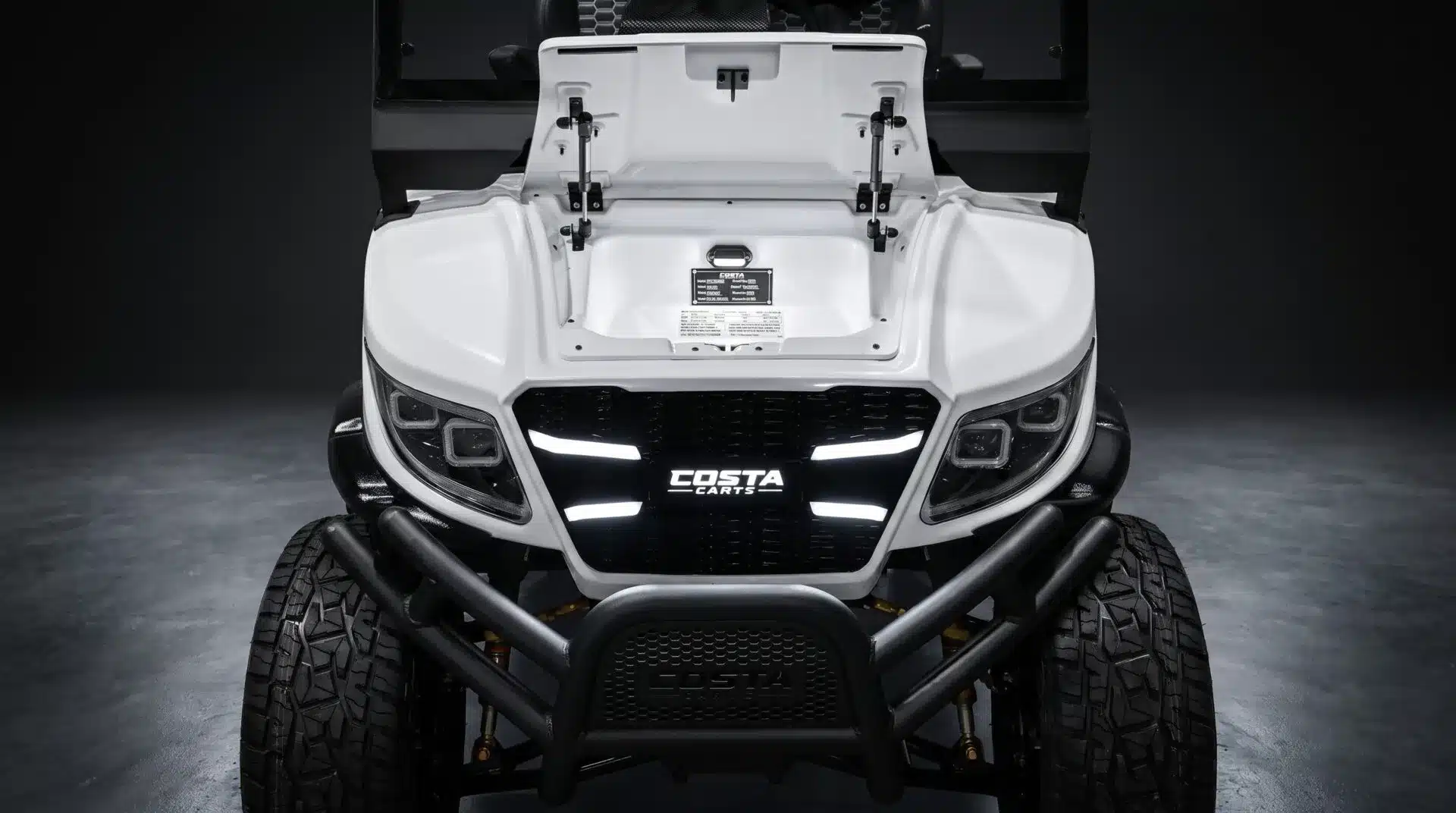
Electric Golf Cart Maintenance: The Complete Owner’s Guide
“
Electric golf cart maintenance comes down to five habits: keep the battery charged and monitored, check tire pressure monthly, inspect brakes and steering, wash and dry the cart properly, and store it correctly between uses. There is no oil to change and no engine to tune. Most of the work is inspection, not repair.
That is the honest answer, and it is the one most maintenance advice online misses. A lot of what you will read about golf cart upkeep was written for lead-acid, gas-era vehicles that needed water levels topped off and belts replaced.
A modern lithium LSV is a different machine. This guide covers what actually matters, what you can do yourself, and what belongs with your dealer.
Do electric golf carts need maintenance?
Yes, but far less than most owners expect. An electric drivetrain has a fraction of the moving parts of a gas engine. There is no oil, no spark plug, no air filter, no fuel system and no exhaust.
What remains is the mechanical side of any vehicle. Tires wear. Brake components wear. Fasteners loosen over time. Salt air and sunlight work on finishes and upholstery.
So the goal shifts from repair to prevention. Good ownership is a short, repeatable inspection routine plus attention to how you charge and store the cart.
The electric golf cart maintenance checklist
Here is the practical version, organized by how often you should do it. Treat it as a framework and defer to your owner’s manual for the specific intervals that apply to your vehicle.
Before each ride
- Check the charge level and confirm the charger is unplugged and stowed.
- Walk the cart and look at the tires for obvious low pressure or damage.
- Test the brake pedal for firmness and the parking brake for hold.
- Confirm headlights, taillights, brake lights and turn signals all work.
- Check that mirrors and the windshield are clean and correctly positioned.
Monthly
- Set tire pressure to the specification on the tire or in your manual, cold.
- Inspect tread depth and look for uneven wear that suggests alignment issues.
- Check that lug nuts and visible fasteners are snug.
- Look under the cart for anything loose, hanging or leaking.
- Wipe down charge port contacts and confirm the cover seals properly.
- Clean upholstery and treat exposed trim, especially in coastal air.
Seasonally or quarterly
- Inspect brake pads, cables and rotors for wear and free movement.
- Check steering for play and listen for noise through a slow full-lock turn.
- Inspect suspension bushings and shocks for weeping or looseness.
- Wash the undercarriage to remove salt, sand and irrigation mineral buildup.
- Review app diagnostics and clear or act on any maintenance alerts.
Annually, with your dealer
- Full brake and suspension service.
- Wheel alignment and torque verification.
- Battery health and balance assessment.
- Controller and wiring harness inspection.
- Software and firmware updates where applicable.
Anything involving the high-voltage system, the controller or the sealed battery pack belongs with an authorized technician. That is not a liability disclaimer so much as a practical one. Those systems are engineered to be sealed, and opening them is how avoidable problems start.
Lithium golf cart maintenance: what changed
Lithium removed the single most labor-intensive job in golf cart ownership. Lead-acid packs needed distilled water added on a schedule, terminals cleaned of corrosion, and specific gravity checked cell by cell. Skip that work for a season and you shortened the pack’s life.
A sealed lithium system needs none of it. There is nothing to water, nothing to vent and no acid to corrode terminals. Lithium golf cart maintenance is mostly about charging discipline and temperature awareness.
Charging habits that protect the pack
Charge after use rather than waiting for the pack to run low. Lithium does not need to be fully discharged before recharging, and shallow, frequent cycles are easier on the cells than deep ones.
Use the charger supplied with the vehicle. Aftermarket chargers may not communicate correctly with the battery management system, and a mismatched charge profile is one of the few ways an owner can genuinely damage a modern pack.
If you park the cart for an extended period, leave it at a partial charge rather than empty, and follow the storage guidance in your manual. Storing a pack at zero is the mistake that costs owners real money.
Why cell balance matters
A battery pack is many cells working together. Over hundreds of cycles, individual cells drift slightly apart in state of charge. The pack then performs to its weakest cell rather than its average, which shows up as shorter usable range long before the cells themselves are worn out.
An active battery balancer corrects that drift continuously rather than waiting for a service visit. Costa’s 400LF and 600L use a sealed 64V EV-grade system with active balancing built in, so the pack keeps working as a pack instead of gradually being limited by one cell.
Electric vs gas golf cart maintenance
The difference is not marginal. A gas cart carries an internal combustion engine with all the consumables that implies.
- Gas carts need oil changes, oil filters, air filters, fuel filters, spark plugs, belt inspections, carburetor service and valve adjustments.
- Electric carts need none of those. The drivetrain is a motor, a controller and a battery.
That changes the ownership experience in three ways. There are fewer scheduled service visits. There are fewer parts that can fail unexpectedly. And the vehicle is quieter and cleaner in the places these carts actually live, which matters when the cart is parked under a porte-cochère rather than in a maintenance yard.
The trade-off is that the electric side of the vehicle is less user-serviceable. You cannot diagnose a controller fault with a wrench and a good ear. That is precisely why diagnostics moved onto the phone.
App-monitored ownership replaces the guesswork
The weakest link in traditional golf cart maintenance is knowing when something needs attention. Owners either over-service on a calendar or wait until something audibly fails.
Costa vehicles are app-monitored, which closes that gap. From your phone you can see:
- Current battery level and charge state.
- System diagnostics from the drivetrain and controller.
- Maintenance alerts when the vehicle flags something worth checking.
That turns maintenance from a guess into a notification. It also gives your dealer something concrete to work from when you call, which usually means a shorter conversation and a faster fix. You can find ownership resources and service support through the Costa owners hub.
Low-maintenance by design, not by accident
The most durable maintenance strategy is engineering that removes failure points before the owner ever sees them. Two choices matter most.
A sealed electrical system
A sealed 64V EV-grade system keeps moisture, salt air and dust away from connections. Corroded terminals and water intrusion cause a large share of electrical faults in older carts. Sealing the system addresses the cause rather than the symptom.
An aluminum chassis
The 400LF and 600L are built on a black powder-coated aluminum chassis. Aluminum does not rust, and the powder coat adds a hard, uniform barrier over it. In coastal and waterfront use, where salt spray is constant and irrigation runs daily, frame corrosion is one of the quietest ways a cart loses value. Removing steel from the frame removes that risk.
Cleaning and cosmetic care
Cosmetic upkeep is where luxury golf cart upkeep diverges most from generic advice. Presence is the point of these vehicles, and finish care protects it.
Wash with a mild automotive soap and a soft mitt. Rinse thoroughly, especially after exposure to salt air or sprinkler overspray. Dry with a microfiber towel rather than letting the cart air-dry, which is how water spots and mineral etching form.
Avoid pressure washing seals, the charge port, the dash and any electrical connection. Keep the spray at a distance and low pressure if you use it at all. For upholstery and trim, use products rated for marine or automotive use and reapply UV protection on a regular basis.
Signs it is time to call your dealer
Some symptoms are worth acting on immediately rather than watching. Contact your authorized dealer if you notice:
- A brake pedal that feels soft, long or inconsistent.
- Noticeable pull, wander or new play in the steering.
- A sudden drop in usable range that charging does not resolve.
- A maintenance alert or fault code in the app.
- Any burning smell, unusual heat or visible damage near the charge port.
- New grinding, clicking or whining under load.
Your dealer has the tools and the vehicle history. Describing what you saw in the app usually shortens the diagnosis considerably.
Frequently asked questions
How often should an electric golf cart be serviced?
Plan on a short owner inspection monthly and a professional service visit on the schedule in your owner’s manual. Usage matters more than the calendar. A cart driven daily through a master-planned community needs attention sooner than one used on weekends. Your dealer can set an interval based on how you actually drive.
What is the most common electric golf cart problem?
Charging and battery issues, and most of them trace back to habits rather than hardware. Leaving a pack discharged for weeks, using a mismatched charger, or ignoring a warning are the usual causes. Tire pressure neglect is a close second, because it quietly reduces range and accelerates tread wear.
Can I wash an electric golf cart with a hose?
Yes, with low pressure and care. Keep water away from the charge port, dash electronics and seals, and dry the vehicle with microfiber afterward. Avoid high-pressure spray on any electrical component.
How long do lithium golf cart batteries last?
Lifespan depends on cycle count, charging habits, temperature and how the pack is managed. Rather than quote a number that may not match your vehicle, check your owner’s manual or ask your dealer about the specific pack in your cart.
Does maintenance affect whether my cart is street legal?
It can. Low-speed vehicle rules generally require working lights, turn signals, mirrors, a horn, seat belts and a windshield, so a burned-out taillight can put you out of compliance. Whether and where you may drive an LSV depends on your state and local law, so confirm the requirements in your jurisdiction.
The takeaway
Electric golf cart maintenance is not complicated, but it does reward consistency. Charge sensibly, check tires and brakes on a rhythm, wash and dry the vehicle properly, and act on app alerts when they appear.
Everything else is engineered out or handled by your dealer. That is the point of a sealed electrical system, active battery balancing, an aluminum chassis and diagnostics on your phone. The vehicle is designed so that ownership stays simple and the cart keeps looking and driving the way it did the day it arrived.
”
Recent Posts

How to Store a Golf Cart for the Off-Season (Snowbird Guide)

Smooth Ride Luxury Electric Golf Cart Engineering: Why Independent Suspension Transforms Resort Trails and Cobblestone Estates
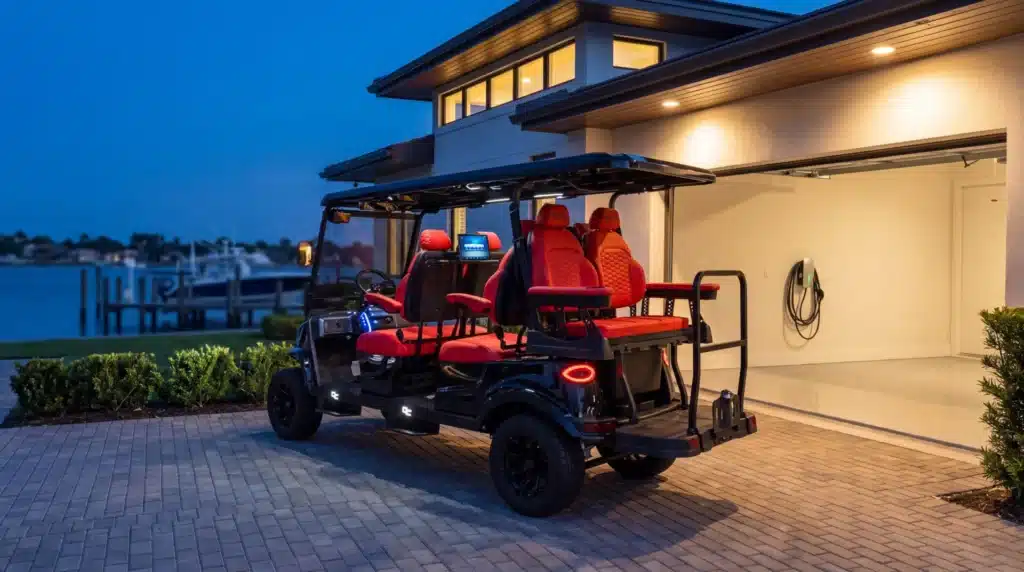
How to Charge an Electric Golf Cart at Home (Time, Cost & Setup)
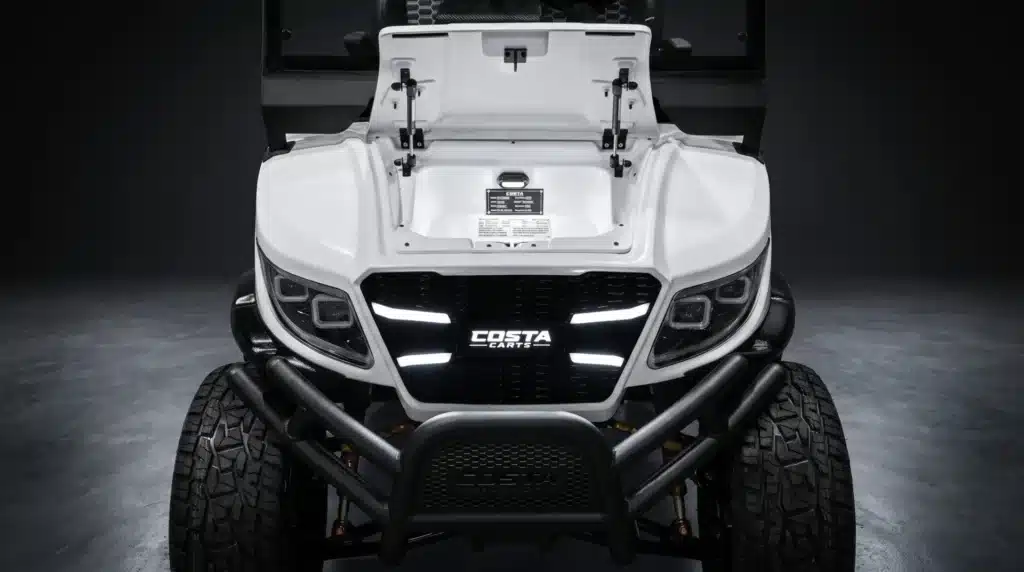
Electric Golf Cart Maintenance: The Complete Owner’s Guide
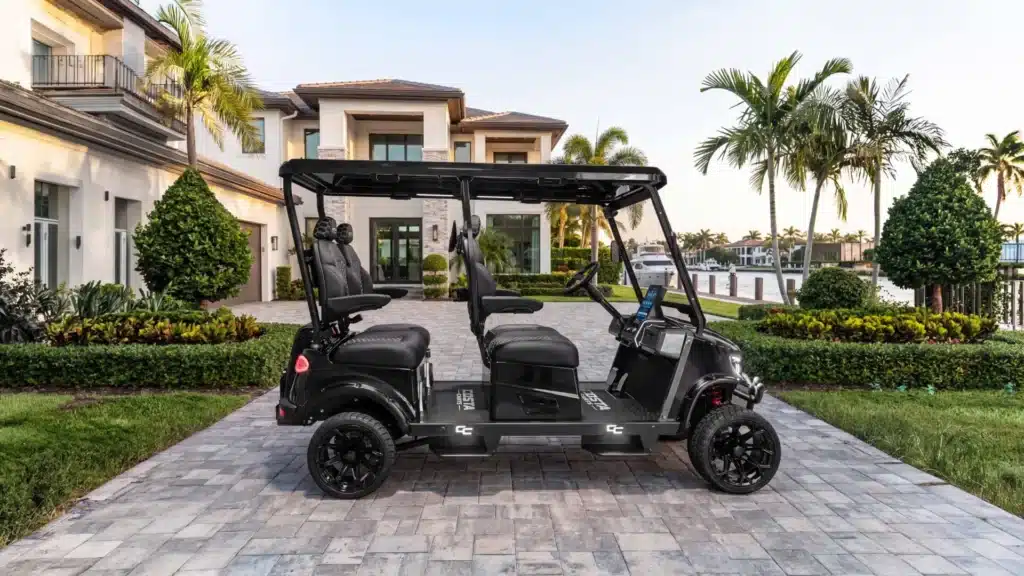
Luxury Golf Cart Brands: How the Premium Market Is Actually Stratified