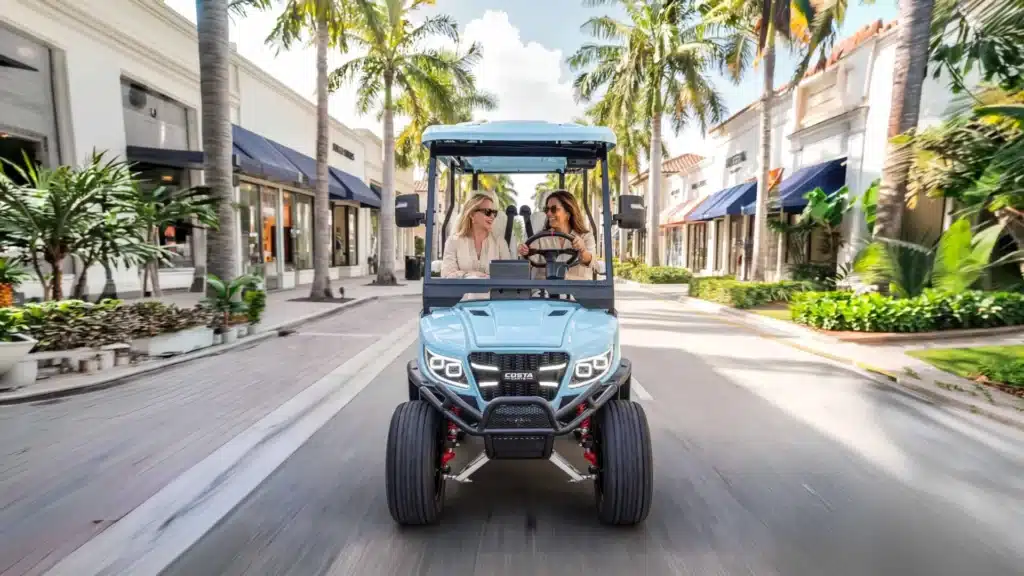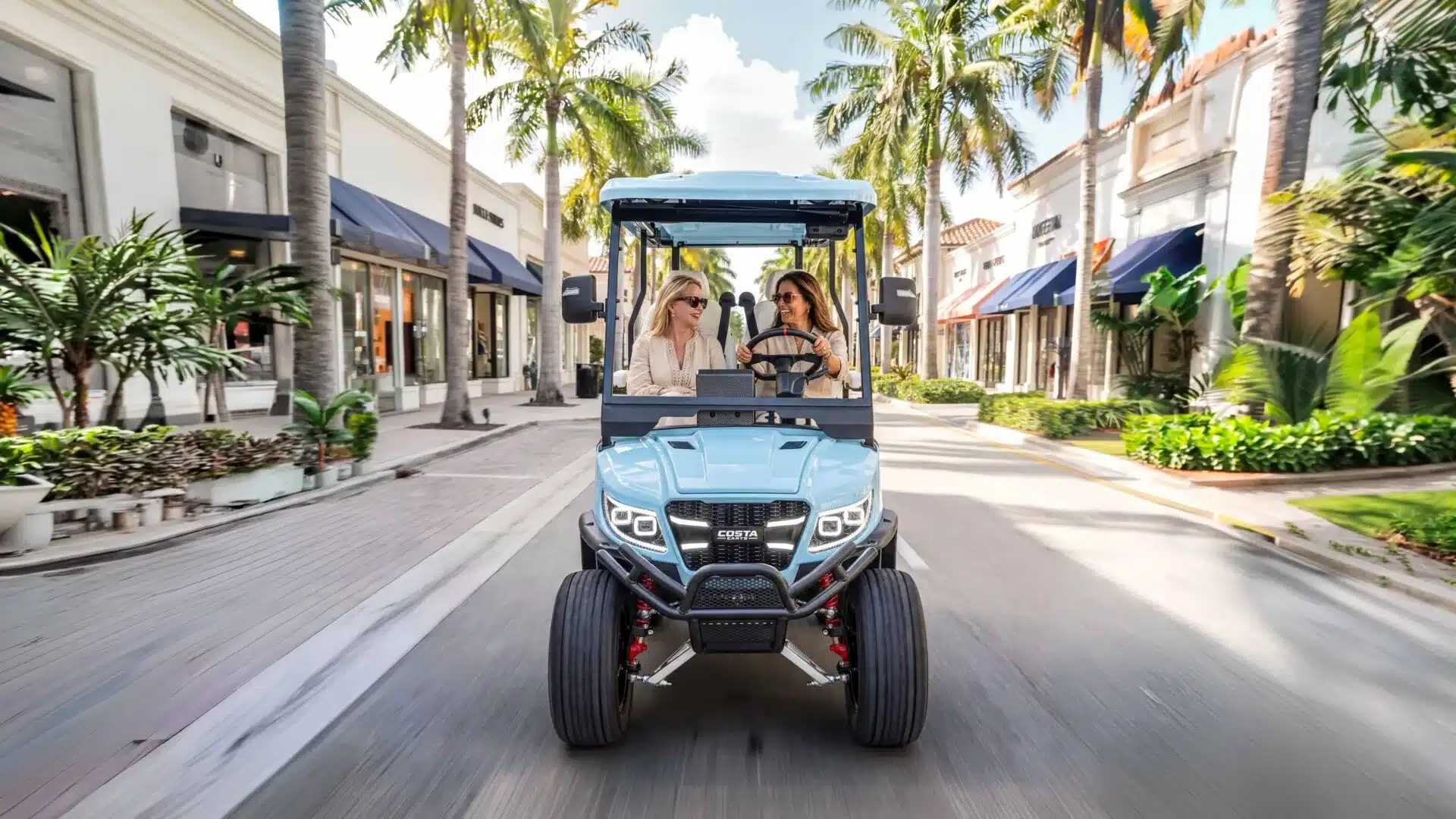
Are Golf Carts Street Legal? A State-by-State Reality Check (2026)
In most of the country, the answer is a qualified yes — but whether golf carts are street legal by state hinges on one distinction that trips up nearly every buyer: is your vehicle a “golf cart” or a federally classified low-speed vehicle? That single classification, layered on top of your specific state and town, determines where you can legally drive. Registered low-speed vehicles can operate on most roads posted at 35 mph or less almost everywhere. Plain golf carts have far narrower, locally controlled access. And a small number of states keep both largely off public roads altogether.
If you’re relocating, shopping across state lines, or simply trying to understand what you can actually drive once you own it, the confusion is understandable. The rules genuinely do vary widely. But underneath that variation is a federal framework that stays consistent from coast to coast, and once you understand it, the state-by-state picture gets much easier to navigate. Here’s how it actually works.
The One Distinction That Governs Every State
Every state draws a line between two kinds of vehicles, and that line is federal, not local. Nearly every state distinguishes a standard golf cart — built for the course, typically topping out under 20 mph, with no manufacturer VIN and not built to federal safety standards — from a low-speed vehicle, which is factory-built to meet federal standards, travels between 20 and 25 mph, and carries a manufacturer-assigned VIN.
That federal standard is the key to the whole thing. A low-speed vehicle is a four-wheeled vehicle with a top speed between 20 and 25 mph that meets Federal Motor Vehicle Safety Standard 500 (FMVSS 500), and it carries a manufacturer-assigned 17-digit VIN that lets it be titled, registered, and insured as a motor vehicle. To meet that standard, the vehicle has to come from the factory equipped with headlights, brake lights, front and rear turn signals, reflectors, mirrors, a parking brake, a windshield, and seat belts. The VIN is the single most important factor in whether a vehicle can be registered for road use — it’s stamped into the vehicle at the factory and cannot be added after the fact by a dealer or owner.
This is why a cart’s classification matters more than how it looks in the driveway. A lifted, decked-out golf cart with a stereo and big tires is still a golf cart in the eyes of the law if it can’t exceed 20 mph and lacks a factory VIN. A purpose-built low-speed vehicle that looks nearly identical is a registerable motor vehicle. The difference isn’t cosmetic — it’s the difference between broad legal road access and almost none.
It’s worth knowing that the terminology shifts from state to state even though the underlying category is the same. Some states use the terms NEV (neighborhood electric vehicle) or LSEV (low-speed electric vehicle) instead of LSV. When an LSV is electric — as every Costa Carts model is — you’ll often see it called an NEV. Legally, the treatment lines up with the low-speed vehicle rules.
The Pattern Most States Follow
Once you know the two categories, the road rules follow a pattern that holds across most of the country. Golf carts that make it onto public roads are almost always restricted to roads with speed limits of 25 mph or less, while registered LSVs typically get access to roads up to 35 mph. Highways, interstates, and high-speed arterials are off-limits everywhere under federal LSV rules. A few other principles are nearly universal: a valid driver’s license is required in the vast majority of states for either vehicle type on public roads, and in virtually every state, impaired-driving laws apply when you’re on a public road regardless of what you’re driving.
The most useful mental model is a two-layer system: the state sets the floor, and your town builds on top of it. The floor typically says LSVs get broad road access while plain golf carts get none unless a local rule grants it — and what your town adds on top is what decides your day-to-day driving. This is why two neighborhoods a few miles apart in the same state can have completely different realities. One town passes an ordinance opening its streets to carts; the next never addresses it, and your cart stays on private property.
Here’s how the major approaches break down across representative states:
- Statewide LSV access; local ordinance for plain carts — Registered LSVs may use roads posted ≤35 mph statewide; plain golf carts only on roads a city or county specifically designates (usually ≤25 mph). Representative states: Florida, Georgia, Virginia, California, Arizona.
- Statewide permit system for golf carts — The state DMV issues a permit/decal allowing golf carts on ≤35 mph roads; LSVs registered separately. Representative state: South Carolina.
- LSV-only for road use — Only registered LSVs may use public roads; plain golf carts are not eligible at all. Representative state: New York.
- Highly restrictive — Little to no provision for LSVs on public roads. Representative states: Delaware, Hawaii, Maryland, Missouri, Rhode Island (among those commonly cited).
- Unique state systems — Distinct classifications that don’t map neatly onto the others. Representative states: Texas (golf-cart license plate), Wyoming (multipurpose vehicle).
A table like this is a starting point, not a substitute for checking your own state and town. Local ordinances routinely narrow what the state permits — restricting which roads are open, whether you can cross higher-speed roads, and even the time of day you can drive.
Where It Gets More Permissive — and More Restrictive
The spectrum is real, and seeing where specific states fall makes the framework concrete.
On the accessible end, Florida is one of the most golf-cart-friendly states in the country. Golf carts may be operated on roadways designated for them with a posted speed limit of 30 mph or less, and once an LSV is titled, registered, and insured, it can be driven on any road posted at 35 mph or less. South Carolina takes a notably accessible approach of its own. Rather than a local-ordinance system, South Carolina has a statewide framework that makes golf carts street legal on public roads posted at 35 mph or less once the owner obtains a permit decal and registration from the DMV. That state also just updated its rules: House Bill 3292, effective May 22, 2025, reorganized the golf cart provisions and expanded nighttime golf cart operation so that all municipalities statewide can now adopt ordinances allowing it.
Georgia sits in the common middle. Under O.C.G.A. 40-6-331, local governing bodies decide which streets are open to personal transportation vehicles and golf carts, so without a local ordinance you can’t legally drive one on public roads no matter how slow the speed limit — but once registered and titled, LSVs can operate on any public road posted at 35 mph or less statewide. Georgia also illustrates how much the fine print varies: according to the Georgia Department of Public Safety, electric LSVs there are not required to carry proof of insurance — a quirk that matters for electric carts specifically and that you’d never guess from a neighboring state’s rules.
On the more restrictive end, California defines a plain golf cart tightly. Under California Vehicle Code Section 345, a golf cart is a four-wheeled vehicle under 1,300 pounds with a maximum speed of 15 mph, and outside narrow circumstances near a golf course, standard golf carts are not street legal — though once registered, LSVs and NEVs can be driven on any road posted at 35 mph or less without a special local ordinance. New York goes further still. The New York DMV does not recognize golf carts as registerable motor vehicles, so without registration they cannot legally be driven on any public road in the state — only vehicles meeting the LSV criteria are street legal, and those may travel on roads posted at 35 mph or less.
And a handful of states are more restrictive than any of these. By one commonly cited summary, low-speed vehicles are not allowed on public roads at all in Delaware, Hawaii, Maryland, Missouri, or Rhode Island. Because rules like these change and sources sometimes lag, those states in particular warrant a direct check with the state DMV before you assume anything.
What This Means If You’re Buying
Here’s the practical takeaway that cuts through all the state-by-state variation: whether golf carts are street legal by state depends far more on what you buy than on where you live. A vehicle that only qualifies as a plain golf cart lands you on the restrictive, locally controlled side of every state’s framework. A factory-built low-speed vehicle starts you on the more permissive side — the side with broad access to roads posted at 35 mph or less in most of the country.
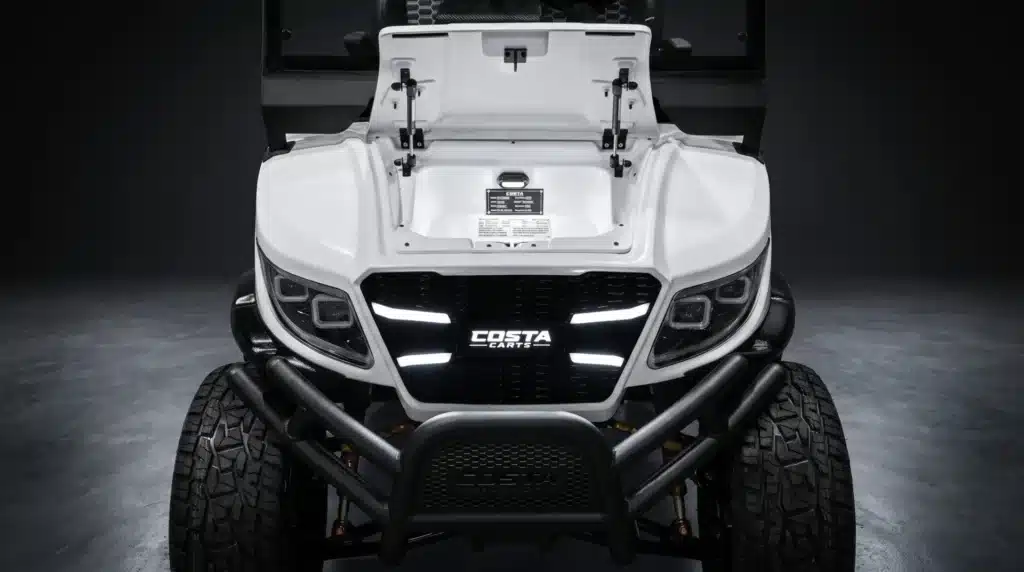
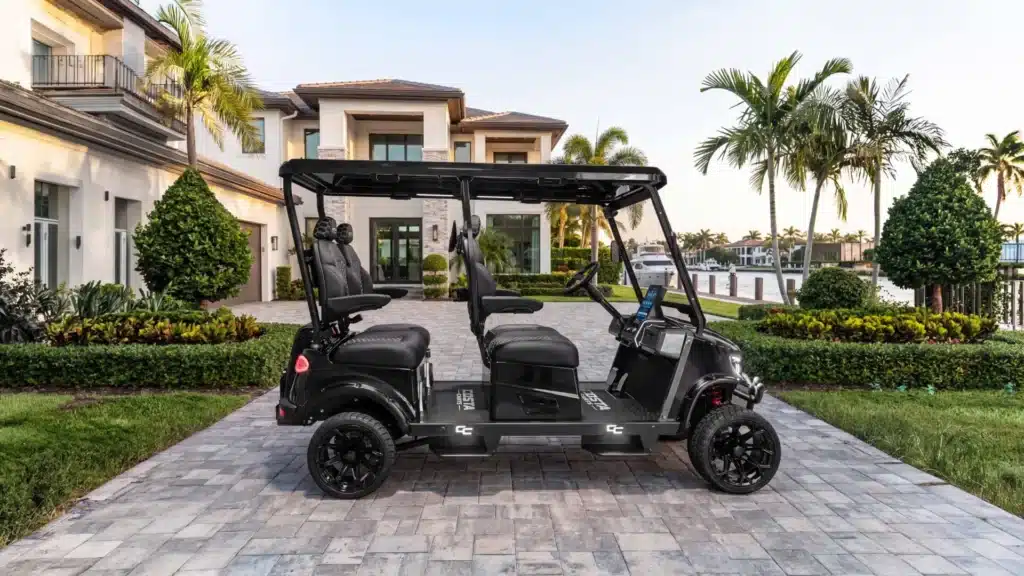
That distinction is exactly where a Costa Carts model sits. Both the 400LF and the 600L are built as low-speed vehicles, with a top speed of up to 25 mph, compliance with the federal FMVSS 500 standard, and a manufacturer-assigned 17-digit VIN. Because that federal standard is the common denominator nationwide, a Costa is eligible for LSV registration and road use across state lines in a way a sub-20-mph course cart simply isn’t. What changes when you cross a state border isn’t whether the vehicle qualifies — it’s the registration and titling process at your local DMV and the specific roads your town has opened. The vehicle class travels with you; the paperwork and the local map are what you confirm on arrival.
None of this is legal advice, and it’s not a substitute for checking your own situation. Rules change, states differ, and local ordinances frequently add requirements the state doesn’t. Before you drive, confirm the current rules with your state’s motor vehicle agency and your city or county, and if you’re in an HOA or planned community, check its rules too. The cleanest path is usually to start with a dealer who understands the low-speed vehicle framework and can point you toward what’s road-legal where you live — you can find a Costa Carts dealer to help you sort the state and local specifics before you buy. Get the classification right, verify locally, and the rest of the picture falls into place no matter which state you call home.
People Also Ask
Which states allow street-legal golf carts?
Most states allow registered low-speed vehicles (LSVs) on roads posted at 35 mph or less, and many also allow standard golf carts on designated local roads. States like Florida, South Carolina, Georgia, Arizona, and Texas are among the more accessible. A few states — Delaware, Hawaii, Maryland, Missouri, and Rhode Island among those commonly cited — are far more restrictive. Always verify current rules with your state DMV.
What’s the difference between a golf cart and a low-speed vehicle?
A standard golf cart is built for the course, typically tops out under 20 mph, and has no manufacturer VIN. A low-speed vehicle is factory-built to meet Federal Motor Vehicle Safety Standard 500, travels 20–25 mph, and carries a 17-digit VIN that lets it be titled, registered, and insured as a motor vehicle. The VIN is what makes road registration possible.
Can you drive a golf cart on any road?
No. Golf carts on public roads are almost always limited to roads posted at 25 mph or less, and only where a local government has designated them. Registered LSVs get broader access — typically roads posted at 35 mph or less. Highways and interstates are off-limits to both everywhere.
Do you need a driver’s license to drive a golf cart or LSV?
In the vast majority of states, yes — a valid driver’s license is required to operate either type on public roads. Rules on private property differ. LSVs, because they’re registered motor vehicles, always require a licensed driver.
Are electric golf carts (NEVs) treated differently from other LSVs?
Legally, an electric low-speed vehicle — often called a neighborhood electric vehicle, or NEV — is treated under the same LSV rules in most states. Some states do add electric-specific quirks; Georgia, for example, does not require electric LSVs to carry proof of insurance. Confirm your state’s specifics.
Is a Costa Carts model street legal across state lines?
Costa Carts models are built as low-speed vehicles — up to 25 mph, FMVSS 500 compliant, with a manufacturer-assigned VIN. That means they’re eligible for LSV registration and road use in most states. What varies by state is the registration process and which local roads permit LSV operation, so confirm the rules where you live before driving.
Which states don’t allow golf carts or LSVs on the road at all?
A small number of states sharply restrict road use. Delaware, Hawaii, Maryland, Missouri, and Rhode Island are commonly cited as having little or no provision for LSVs on public roads. Because these rules can change, verify directly with the state’s motor vehicle agency.
Recent Posts
How to Store a Golf Cart for the Off-Season (Snowbird Guide)

Smooth Ride Luxury Electric Golf Cart Engineering: Why Independent Suspension Transforms Resort Trails and Cobblestone Estates
How to Charge an Electric Golf Cart at Home (Time, Cost & Setup)
Electric Golf Cart Maintenance: The Complete Owner’s Guide
Luxury Golf Cart Brands: How the Premium Market Is Actually Stratified