Are Golf Carts the Future of Neighborhood Transportation?
There’s a moment that happens to a lot of new golf cart owners. A few weeks into ownership, they realize they haven’t driven their car to the grocery store, the coffee shop, or their neighbor’s house in days. Not because they couldn’t — because they didn’t need to. The cart was faster, easier, and frankly more enjoyable for everything within a mile or two.
That moment is happening more often, in more places, and the pattern it points to is hard to ignore.
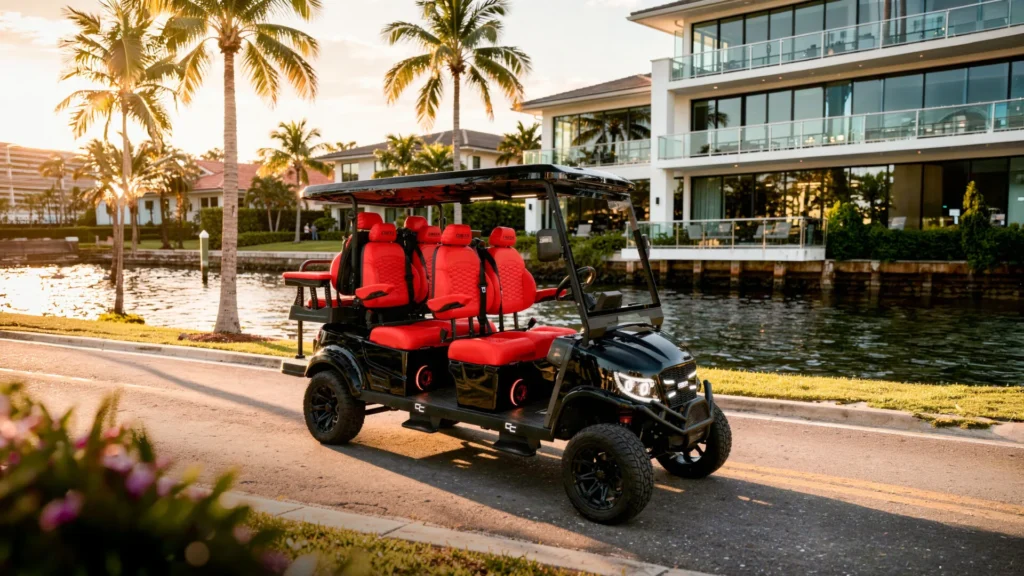
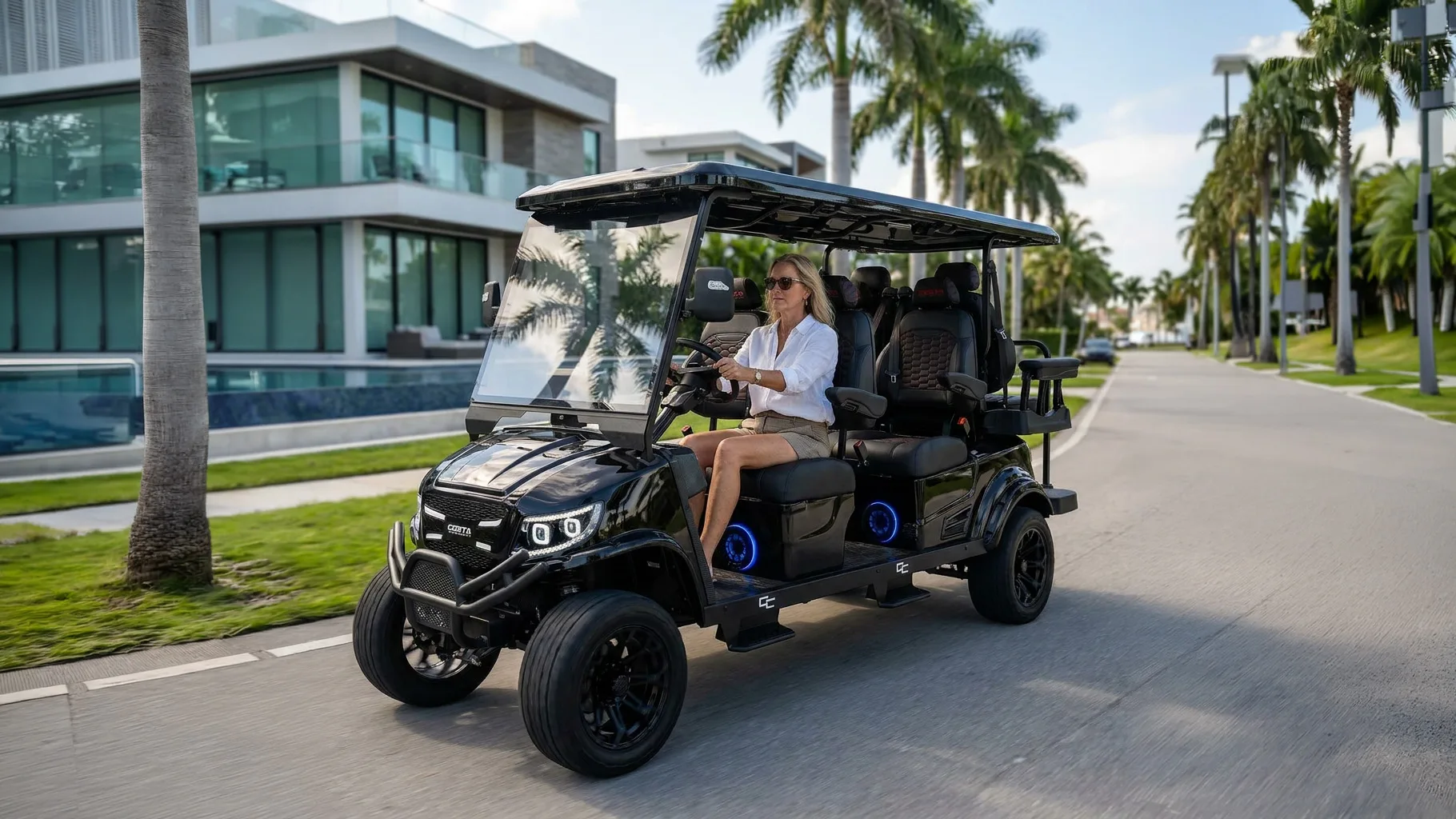
Golf carts — specifically street-legal electric models — are quietly becoming a legitimate alternative to the car for short-distance transportation. Not as a novelty, and not just in retirement communities. This is happening in coastal towns, master-planned neighborhoods, resort communities, and urban infill areas across Florida and beyond. The question worth asking isn’t whether golf carts can serve as local transportation. In many places, they already do.
Why the Shift Is Happening Now
The timing isn’t accidental. Several things converged at once to make this moment different from previous golf cart trends.
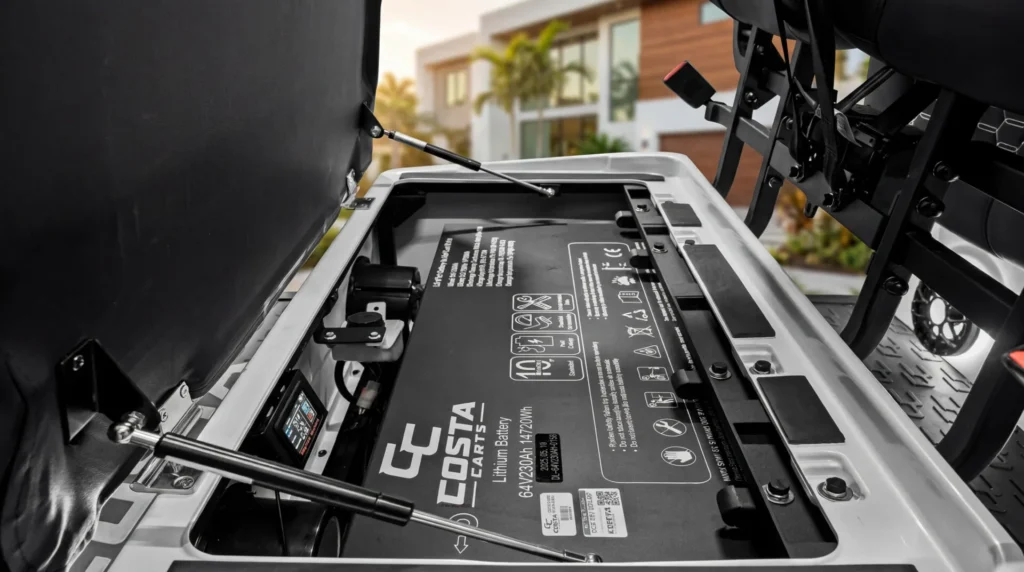
Battery technology improved dramatically. Modern lithium-powered electric carts — like those in the Costa Carts lineup — can travel up to 100 miles on a single charge. That’s not a marketing claim designed to impress showroom shoppers; that’s a range figure that genuinely changes what’s possible. When range anxiety disappears, so does the mental friction of choosing the cart over the car for daily errands.
At the same time, communities themselves started changing. Walkable and low-speed-vehicle-friendly development became a design priority in many Florida neighborhoods. Mixed-use developments — retail, dining, and residential in close proximity — created natural ecosystems where a golf cart is the most sensible way to get from point A to point B. Add dedicated cart paths, posted LSV-friendly roads, and growing community acceptance, and the infrastructure started to catch up with the demand.
Then there’s the cost of car ownership. Between insurance, fuel, maintenance, and depreciation, the average American spends well over $10,000 per year to own and operate a vehicle. For households that own two cars — one of which is primarily used for short local trips — the case for replacing that second car with a premium electric cart is genuinely compelling on the numbers alone.
What “Local Transportation” Actually Looks Like
It’s worth being specific about what this looks like in practice, because “local transportation” can sound abstract until you see how cart owners actually use them.
In coastal Florida communities, it means driving to the marina to check on a boat, running to the beach for a morning walk, grabbing takeout from a restaurant two neighborhoods over, or shuttling kids to a friend’s house without warming up a car. In resort communities and private estates, it means moving across large properties without taking a full-size vehicle. In mixed-use neighborhoods near Orlando, it means covering the last mile between a parking area and a destination in a way that’s faster than walking and far less hassle than driving.
None of these are extreme use cases. They’re Tuesday. The golf cart fits into daily life because daily life, for most people in the right geography, happens within a compact radius. The average American car trip is under five miles. A well-built electric cart can handle that distance before most engines have warmed up.
The Street-Legal Layer
What separates a lifestyle toy from a genuine transportation tool is legality. Street-legal golf carts — classified as Low Speed Vehicles (LSVs) in Florida and most other states — are equipped with the safety systems required to operate on public roads posted at 35 mph or below. That means headlights, taillights, turn signals, mirrors, seatbelts, a windshield, and a VIN. It means registration, insurance, and a licensed driver behind the wheel.
This distinction matters because it’s what moves a golf cart from the cart path to the road network — and that’s where transportation actually happens. A cart that can only travel on private paths or designated trails is a recreational vehicle. A street-legal LSV is transportation infrastructure you own.
Costa Carts builds to this standard. The 400LF and 600L series aren’t golf carts that were retrofitted with lights and a mirror. They’re engineered as street-legal electric vehicles from the ground up, with a 64V power system, electronic power steering, independent suspension, and a ride quality that competes with vehicles costing many times more.
What Communities Are Starting to Recognize
Local governments and community developers are paying attention in ways they weren’t a decade ago. Some Florida municipalities have expanded the roads where LSVs are permitted. Planned communities are increasingly designing infrastructure with golf carts in mind — wider cart paths, cross-access between residential and commercial zones, and dedicated parking. HOAs in coastal communities are updating their rules to encourage, rather than merely tolerate, cart use.
This isn’t fringe behavior. It’s an infrastructure response to observed demand. When enough residents start using a mode of transportation organically, the built environment tends to adapt around it. That feedback loop is well underway in large parts of Florida, the Carolinas, and across coastal communities nationwide.
There’s also an environmental dimension that community planners can’t ignore. Every car trip replaced by an electric cart reduces emissions, reduces road congestion, and reduces the noise footprint of a neighborhood. For communities that have sustainability goals baked into their charters, the electric golf cart is a natural fit that doesn’t require residents to sacrifice convenience or comfort.
The Experience Argument
Transportation choices aren’t purely rational. People don’t drive the same route to work for twenty years purely because it minimizes time. Habit, comfort, and experience shape behavior as much as logic does.
This is where electric golf carts have an underappreciated advantage. Driving one is genuinely enjoyable in a way that a car trip to the same destination almost never is. The openness, the quiet, the lower speed, the ability to wave at a neighbor or pull over without the theater of parallel parking — these aren’t minor details. They make the trip itself something worth doing, not just something you do to get somewhere.
Owners of premium carts like Costa’s frequently describe this shift: the cart didn’t just replace a car trip, it made the trip better. That experiential quality is what turns occasional users into daily users — and daily users into advocates who influence the people around them.
People Also Ask
Are golf carts street legal for transportation?
Street-legal golf carts, classified as Low Speed Vehicles (LSVs), are legal on public roads posted at 35 mph or below in Florida and most U.S. states. They require headlights, turn signals, mirrors, seatbelts, a windshield, registration, and insurance.
Can a golf cart replace a car for daily use?
For short-distance daily tasks — errands, school runs, community travel — a street-legal electric golf cart can replace a car entirely. Most households use them as a supplement to a primary vehicle rather than a full replacement.
How far can a modern electric golf cart travel?
Lithium-powered models like the Costa Carts 400LF can travel up to 100 miles on a single charge, which comfortably covers daily use for most neighborhood and community transportation needs.
What makes a golf cart street legal in Florida?
Florida requires LSVs to have headlights, brake lights, turn signals, mirrors, windshield, seatbelts, a VIN, registration, and insurance to operate on roads posted at 35 mph or below.
Are golf carts allowed in neighborhoods?
In most Florida communities with streets posted at 35 mph or below, street-legal golf carts are permitted. Some municipalities and HOAs have additional rules — always verify local ordinances before driving on public roads.
Is a golf cart a good investment for local transportation?
For households in golf-cart-friendly communities, yes. Reduced fuel, maintenance, and insurance costs compared to a second car — combined with daily usability — make a quality electric cart a sound long-term investment.
Recent Posts
Range Anxiety Isn’t What You Think: How Far Modern Golf Carts Really Go
Are Golf Carts the Future of Neighborhood Transportation?
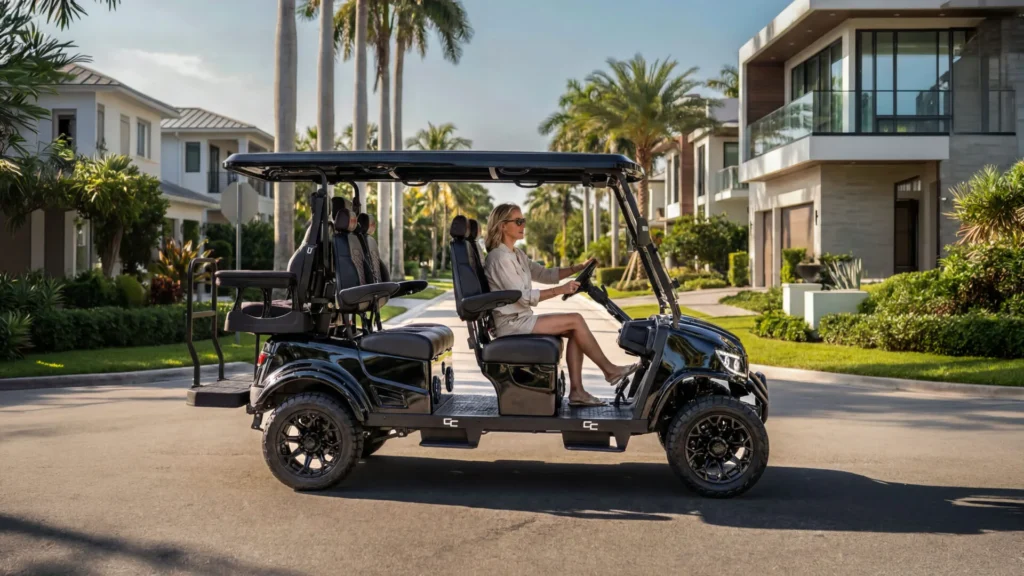
The Rise of Street-Legal Golf Carts in Modern Communities
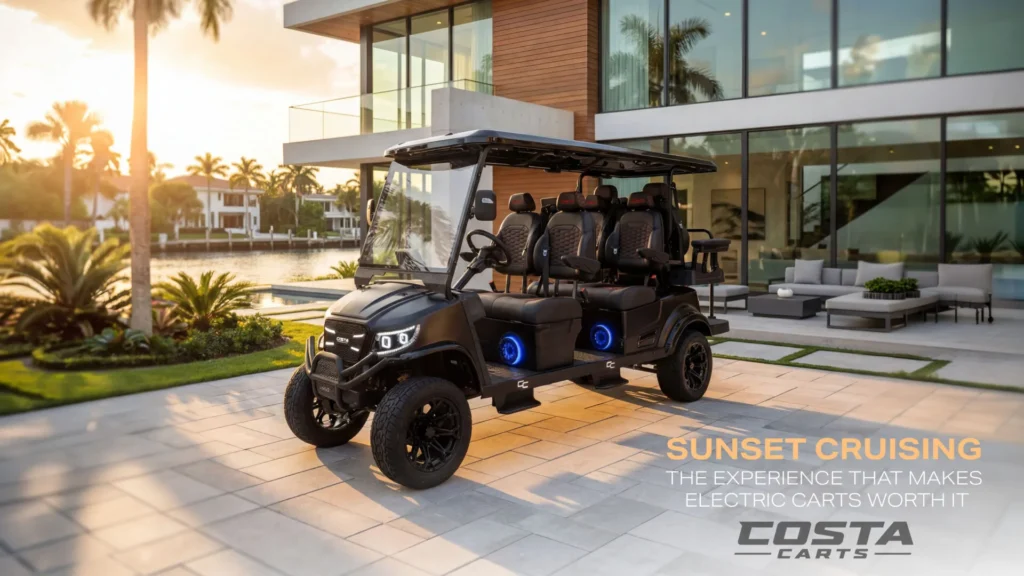
Sunset Cruising: The Experience That Makes Electric Carts Worth It
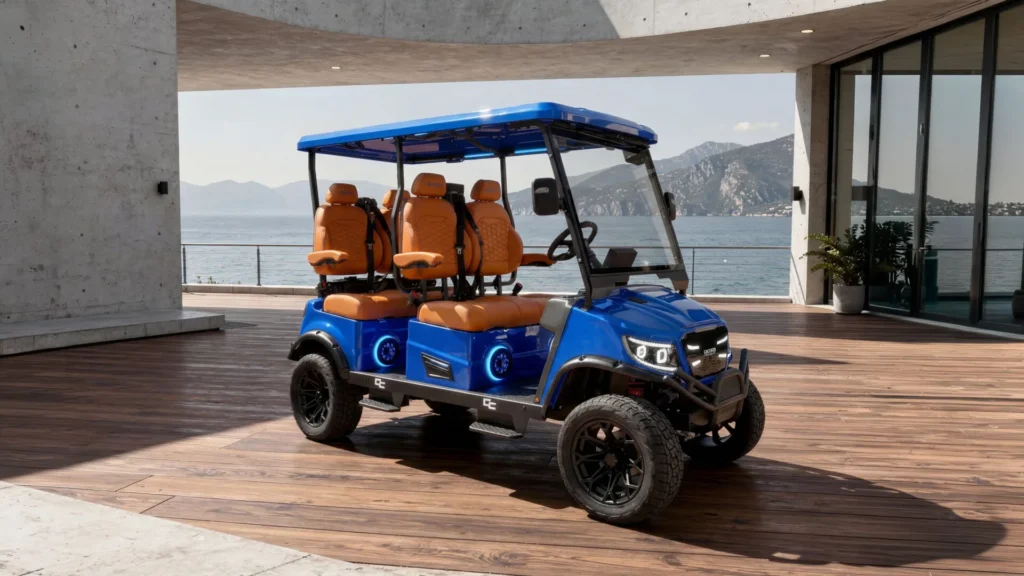
Weekend Freedom: How a Costa Cart Changes Your Routine