Range Anxiety Isn’t What You Think: How Far Modern Golf Carts Really Go
Range anxiety is a real phenomenon. It shapes how people think about electric vehicles at every price point, and golf carts are no exception. The question — how far can this thing actually take me before I’m stranded somewhere inconvenient — is one of the first things serious buyers want answered. It’s a fair question. It just tends to get answered poorly.
The honest answer is that for most people using a golf cart the way it’s actually intended to be used, range stopped being a meaningful concern the moment lithium battery technology matured. The numbers have moved significantly in the last several years, and the mental model most shoppers carry into a dealership hasn’t caught up with where the product actually is.
Here’s what the range conversation actually looks like when you start from the real numbers rather than the assumptions.
What the Numbers Actually Say
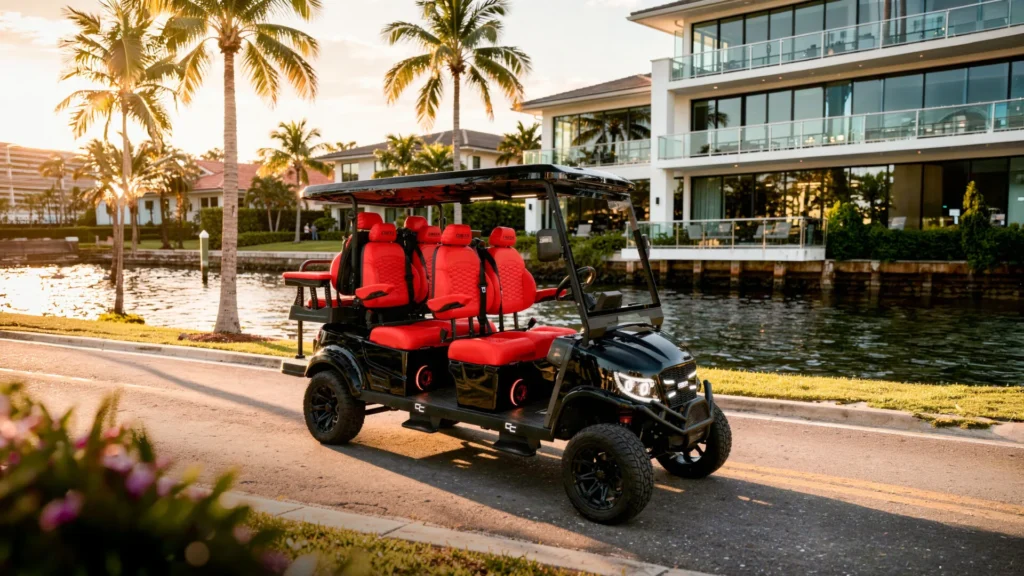
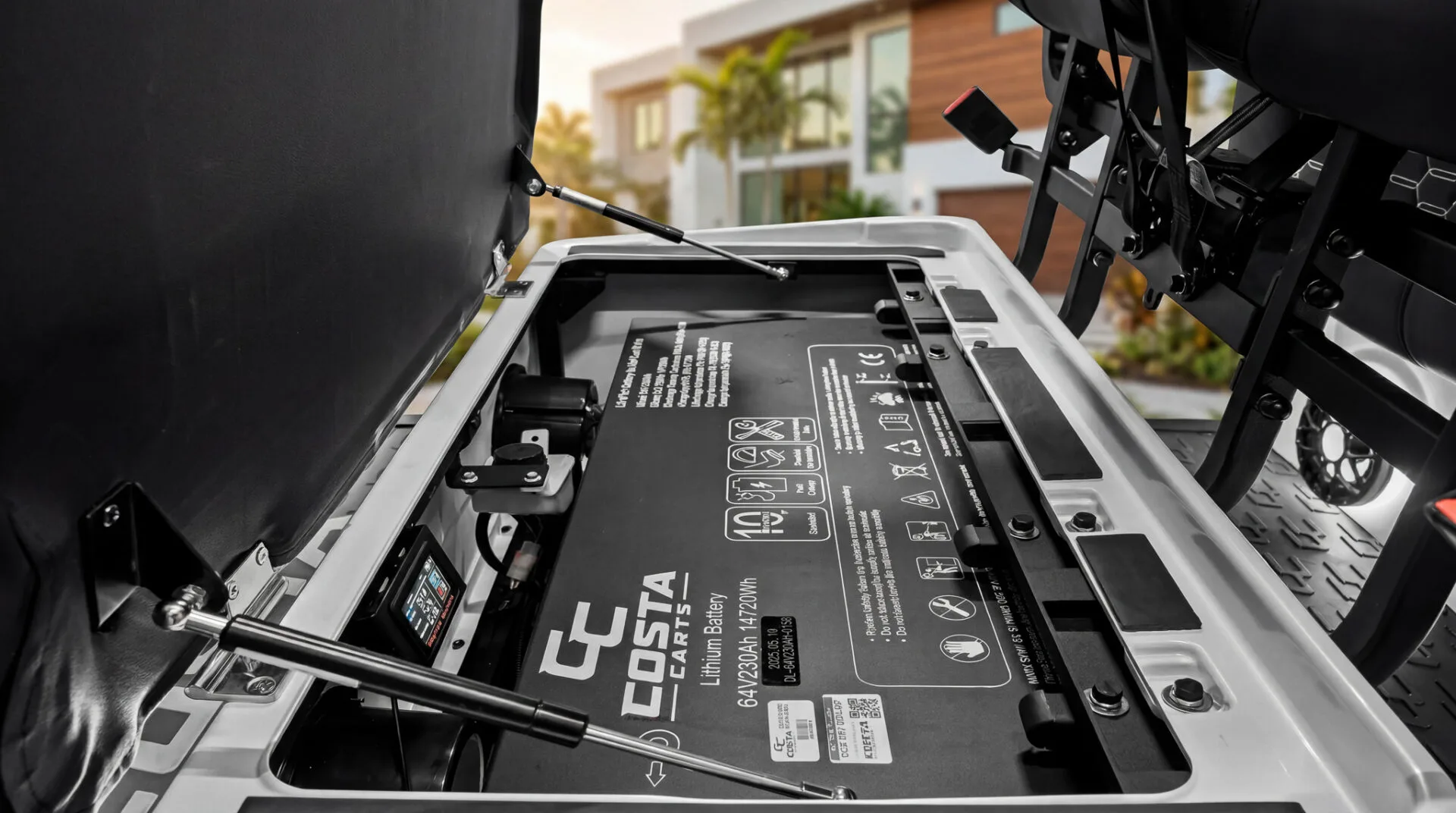
Both the Costa Carts 400LF and 600L are powered by a 64V 230Ah lithium battery system rated for up to 100 miles of range on a single charge. That figure is confirmed directly from Costa’s model specifications and applies across the full lineup regardless of whether you’re in the four-passenger 400LF or the six-passenger 600L.
One hundred miles is a number worth sitting with for a moment. The average American car trip is under five miles. The average daily driving total for most suburban and coastal Florida residents who own a golf cart — running errands, visiting neighbors, making marina runs, doing the school pickup loop — tends to fall somewhere between five and twenty miles on a typical day. At that usage rate, a single full charge on a Costa cart covers the better part of a week before you need to plug in again.
This is why the range anxiety framing doesn’t quite fit the golf cart use case the way it fits long-distance EV travel. You’re not planning a road trip. You’re navigating a community. The math is different, and once you run it against your actual daily patterns, the 100-mile ceiling starts to look like far more than you’ll ever need on any given day.
What Actually Affects Range in Real Use
The rated range of any electric vehicle — cart or car — represents performance under a defined set of conditions. Real-world range will vary, and understanding what moves that number helps you make an honest assessment of what you’ll experience in daily ownership.
- Terrain is the most significant variable. Flat roads, which describe the overwhelming majority of coastal and community driving in Florida, are the most efficient conditions for an electric drivetrain. The motor isn’t working against elevation, so energy consumption stays low and consistent. Hilly terrain — less common in most of Costa’s target markets but relevant if your property or community has significant grade changes — draws more from the battery per mile.
- Passenger load matters, though less dramatically than many buyers expect. The difference between driving solo and carrying four passengers on a well-engineered cart is measurable but not dramatic. A 64V system with a 230Ah battery pack has enough reserve capacity that full occupancy doesn’t cut your range in half — it trims it modestly.
- Speed has a real effect. Running at the top end of the 25 mph ceiling consistently draws more energy than cruising at 15 to 18 mph. For most neighborhood and community use, the natural pace of driving — stopping at intersections, navigating residential streets, pausing to let pedestrians cross — means you’re rarely sustaining maximum speed long enough for it to become a meaningful range factor.
- Accessory use — running the audio system, using lights in low-light conditions, charging devices via USB — draws from the battery, but at a level that makes a negligible difference across typical daily use. The 650W 12V reducer in Costa’s 2026 models handles accessory power efficiently enough that running the stereo on an evening drive isn’t going to strand you two neighborhoods from home.
The Charging Side of the Equation
Range is only half the story. The other half is how quickly and conveniently you can get back to full.
Lithium battery systems charge significantly faster than the lead-acid systems that powered most golf carts a decade ago. For the vast majority of Costa Carts owners, the charging routine looks exactly like charging a phone: plug in when you get home, unplug in the morning. There’s no trip to a gas station, no monitoring a slow overnight charge with anxiety, and no degraded performance as the battery ages through cycles the way lead-acid packs do.
The practical implication is that range between charges matters less when recharging is this frictionless. A cart that offers 100 miles of range and charges overnight at home effectively has unlimited range for any realistic daily use pattern — because you’re restoring the full 100 miles every night regardless of how much you used.
This is the part of the range conversation that gets skipped in most spec comparisons, and it matters. A car with a 300-mile tank that you have to drive to a fuel station to refill is a different ownership experience than a cart with a 100-mile range that refuels in your own garage. For daily use in a community setting, the cart’s charging model is genuinely more convenient.
What to Verify Before You Buy
Not every cart marketed with an impressive range figure delivers that range in real-world conditions, and not every battery system ages the same way. A few things worth verifying before you commit.
- Battery chemistry matters. Lithium iron phosphate (LiFePO4) cells are the current benchmark for golf cart applications — stable, long-cycle-rated, and they retain capacity well over years of regular use. Less sophisticated lithium formulations and lead-acid systems both degrade more quickly and deliver less consistent performance over time. Ask specifically what battery chemistry is in the cart you’re evaluating.
- The battery management system is equally important. An active battery balancer — which Costa’s 2026 models include as a standard feature — keeps cells balanced across the pack, which protects long-term capacity and prevents the uneven degradation that shortens overall battery life. This is an engineering detail that rarely appears in marketing materials but has real consequences for what the cart’s range looks like five years into ownership.
- Ask about the warranty and what it covers relative to battery performance. A cart that claims 100-mile range but carries a short or limited battery warranty is telling you something about how much confidence the manufacturer has in those numbers holding over time.
People Also Ask
How far can a modern electric golf cart travel on one charge?
The Costa Carts 400LF and 600L are both rated for up to 100 miles of range on a single charge, powered by a 64V 230Ah lithium battery system. Real-world range varies based on terrain, load, speed, and accessory use.
What affects golf cart range the most?
Terrain is the biggest factor — flat roads maximize efficiency while hills draw more power. Passenger load, sustained speed, and temperature also affect range, though typically within a manageable margin for everyday community use.
How long does it take to charge an electric golf cart?
Charge times vary by charger output and battery size. Lithium systems charge significantly faster than lead-acid. Most owners plug in overnight and wake up to a full charge, making daily recharging simple and frictionless.
Do electric golf carts lose range over time?
Lithium battery systems retain capacity far better over time than lead-acid alternatives. Features like active battery balancers — standard on Costa’s 2026 models — help maintain cell health and protect long-term range performance.
Is 100 miles of range enough for daily golf cart use?
For the vast majority of community, neighborhood, and coastal lifestyle use, yes — comfortably. Most owners cover well under 20 miles per day, meaning a single charge covers several days of typical use.
What should I look for in a golf cart battery?
Lithium iron phosphate chemistry, an active battery management system, and a meaningful battery warranty are the three most important things to verify. These factors determine not just initial range but how the cart performs years into ownership.
“`
Recent Posts
Range Anxiety Isn’t What You Think: How Far Modern Golf Carts Really Go

Are Golf Carts the Future of Neighborhood Transportation?
The Rise of Street-Legal Golf Carts in Modern Communities
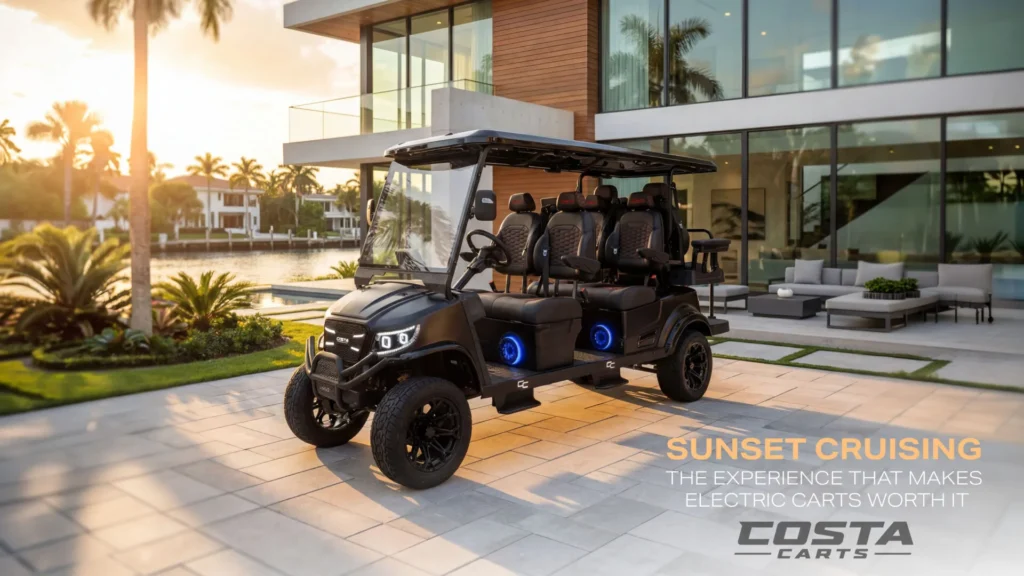
Sunset Cruising: The Experience That Makes Electric Carts Worth It
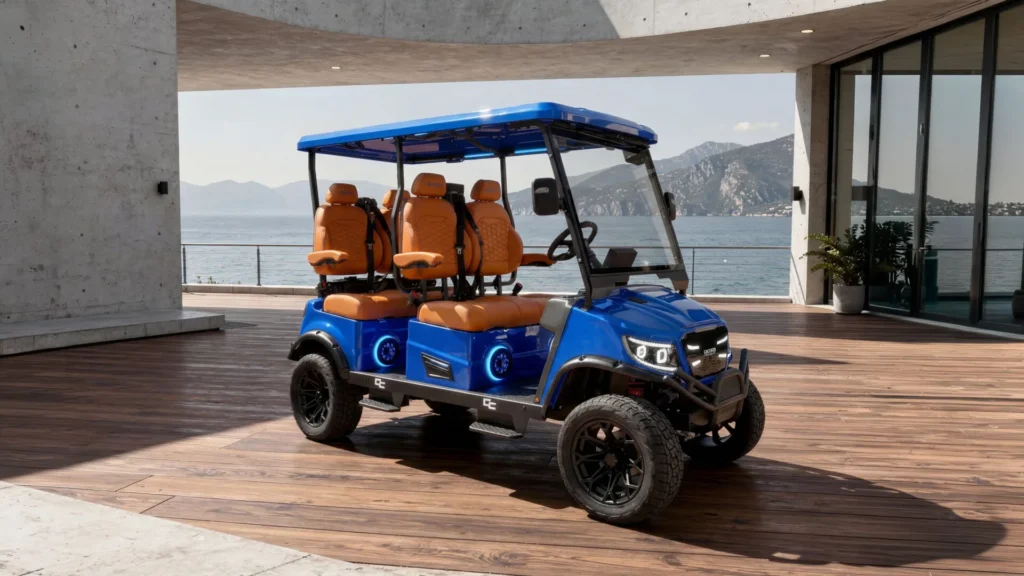
Weekend Freedom: How a Costa Cart Changes Your Routine