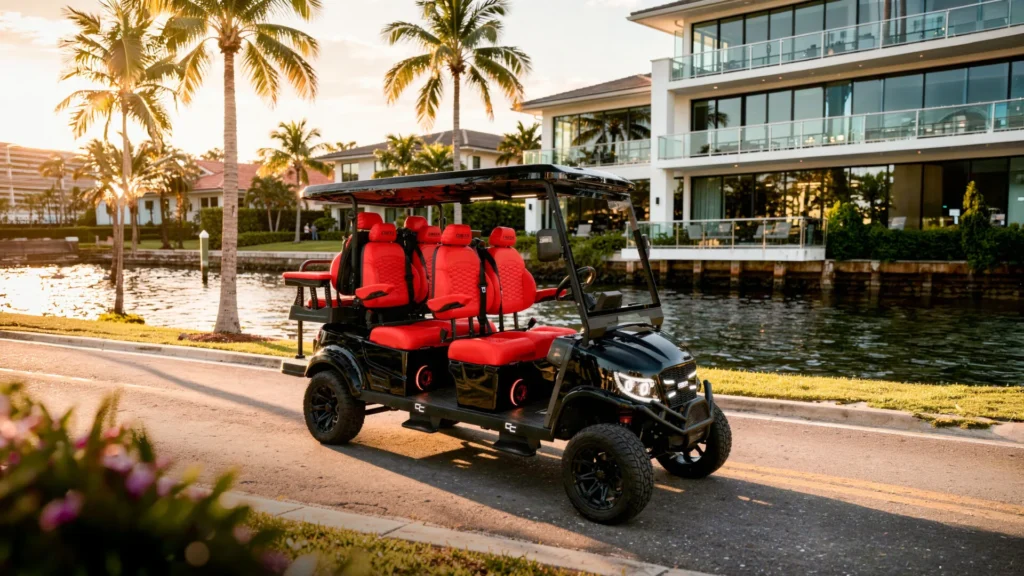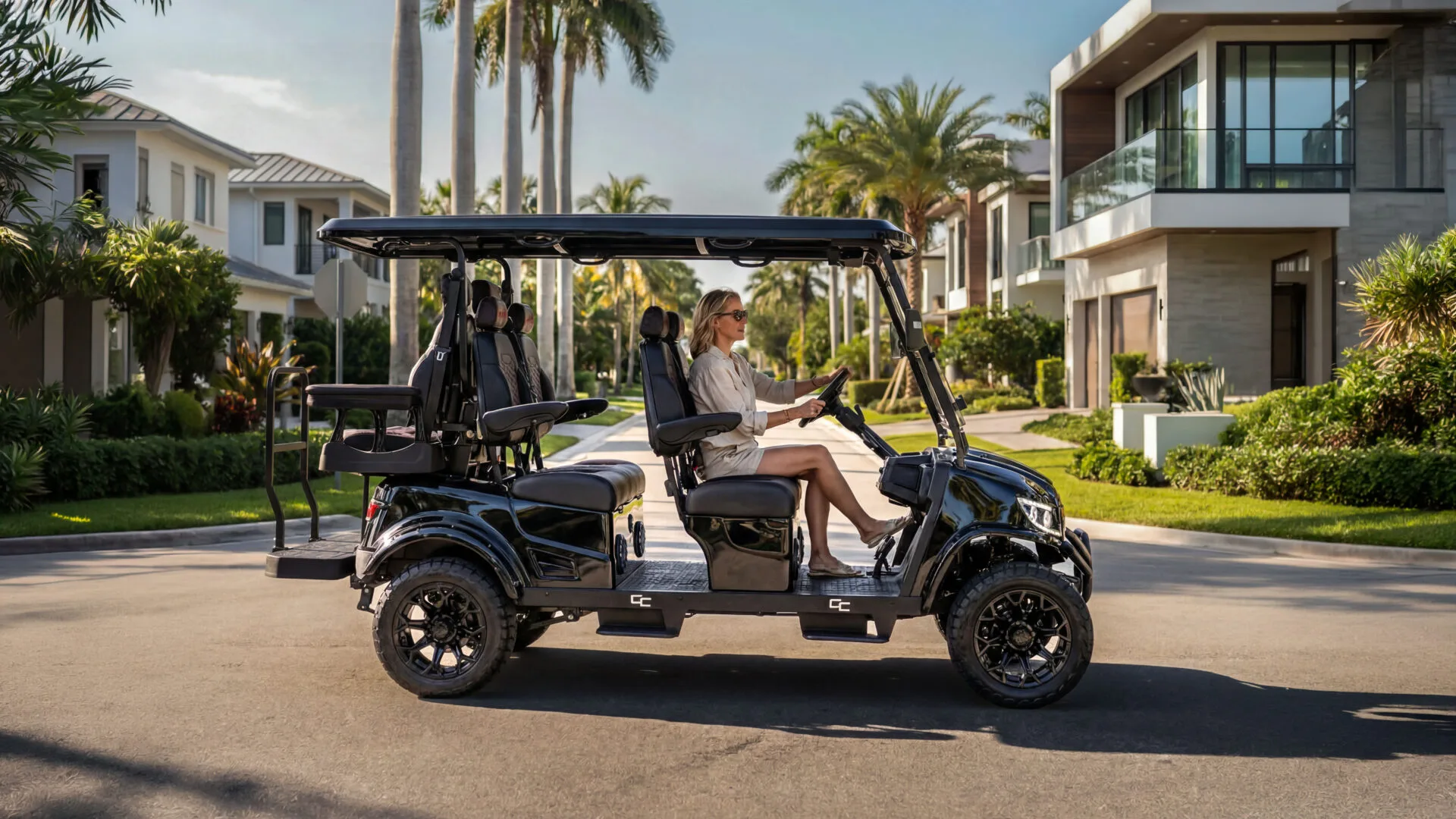
The Rise of Street-Legal Golf Carts in Modern Communities
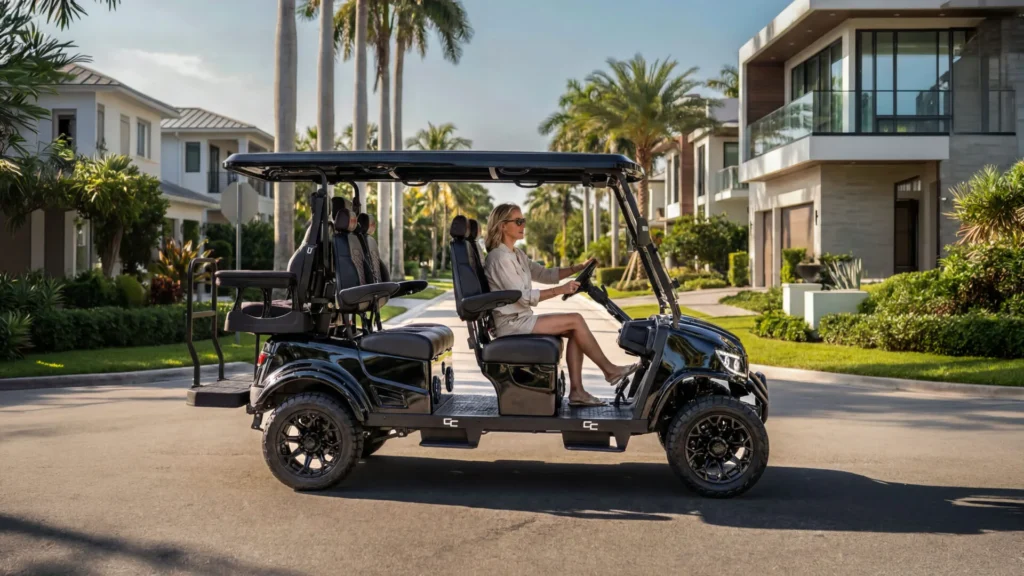
Ten years ago, a golf cart parked in a residential driveway meant one of two things: the neighborhood had a private golf course, or someone had converted a used cart for property use. Today, that same cart is just as likely to be a street-legal electric vehicle with a VIN, insurance, a 100-mile range, and a price point that competes with a quality motorcycle or entry-level car. The category has changed. What’s happening in communities across Florida and the broader coastal South isn’t a trend. It’s a structural shift in how people think about moving through the places they live.
Understanding why this is happening — and why it’s accelerating — requires looking at several things at once: infrastructure, economics, technology, and something harder to quantify but equally important, which is how people want their daily lives to feel.
The Infrastructure Finally Caught Up
For a long time, the practical ceiling on golf cart adoption was legal access. A cart you couldn’t take on public roads was a recreational vehicle with limited utility — enjoyable on a private property or designated path, but not a real alternative to anything. The expansion of Low Speed Vehicle (LSV) legislation changed that equation in a meaningful way.
Florida has been particularly progressive on this front. LSV-compatible roads — those posted at 35 mph or below — exist throughout coastal communities, retirement neighborhoods, master-planned developments, and beach towns across the state. Many municipalities have actively expanded the network of roads where street-legal carts can operate, recognizing the demand already present in their communities. HOAs that once treated golf carts as an afterthought have updated their rules, added cart parking near community amenities, and in some cases built dedicated path infrastructure connecting residential streets to retail and waterfront areas.
The cart didn’t change to fit the infrastructure. The infrastructure adapted to acknowledge what residents were already doing.
Technology Made the Product Worth Wanting
The golf cart of fifteen years ago was a utility vehicle with a narrow use case. Lead-acid batteries gave modest range, required regular maintenance, and degraded noticeably over time. The ride quality was functional at best. The build materials communicated clearly that this was a product designed to be affordable and adequate rather than something you’d choose for its own qualities.
Lithium battery technology changed the range conversation entirely. Modern electric carts with quality lithium packs — like those powering the Costa Carts lineup — offer up to 100 miles on a single charge, charge faster than older battery systems, and maintain consistent performance across years of regular use without the degradation cycle that made lead-acid ownership frustrating. Range anxiety, which was a legitimate objection to electric cart ownership a decade ago, has largely been engineered away.
The drivetrain and chassis improvements matter equally. Electronic power steering, independent suspension, 64V power systems delivering smooth and linear acceleration — these aren’t incremental improvements on an old formula. They represent a genuine rethinking of what the product is. A Costa Carts 400LF or 600L drives the way a well-sorted EV drives: composed, responsive, quiet, and refined in a way that makes the experience worth having repeatedly. That quality is what converts occasional users into daily users, and daily users into advocates.
The Economics Are Increasingly Hard to Ignore
The average American household spends more than $10,000 per year on vehicle ownership. For households with two cars — a common configuration in suburban and coastal Florida — and where one of those vehicles is used almost exclusively for short local trips, the case for replacing that second car with a premium electric cart is genuinely compelling.
The math works like this:
- The upfront cost of a quality street-legal electric cart is substantially less than a new car
- Insurance costs are dramatically lower
- Fuel costs are replaced by electricity costs that are a fraction of the equivalent gasoline expense
- Maintenance on a lithium-electric drivetrain is minimal compared to an internal combustion vehicle
- The useful life of a well-built cart, properly maintained, is measured in decades rather than the seven-to-ten-year replacement cycle most car owners operate on
None of this means a golf cart replaces every car trip. It doesn’t. But in communities where the infrastructure supports it, the cart absorbs a significant portion of daily driving — and that portion is where most of the cost and most of the friction lives.
What Communities Are Actively Building Toward
The shift isn’t happening in a vacuum. Developers, planners, and local governments are responding to observable demand in ways that will accelerate adoption further. New master-planned communities in Florida are being designed with golf cart infrastructure built in from the site plan stage — dedicated paths, cross-access easements connecting residential to commercial, cart parking at amenity centers and retail nodes. This is no longer an afterthought in community design. It’s a selling feature.
Coastal municipalities that have expanded LSV access have seen increased interest from buyers specifically seeking cart-friendly environments. Real estate listings in communities known for strong golf cart culture — The Villages, Babcock Ranch, many of the barrier island communities along Florida’s coasts — routinely cite cart accessibility as a feature alongside pool access and proximity to the water. The cart-friendliness of a community has become a component of its desirability in a way it simply wasn’t a generation ago.
This creates a feedback loop that tends to accelerate itself. More cart-friendly infrastructure attracts more cart owners. More cart owners generate more demand for infrastructure. Communities that get ahead of this dynamic become destinations for exactly the kind of resident — active, lifestyle-oriented, quality-conscious — that developers and municipalities are competing to attract.
The Experience Dimension
All of this is context. The reason the shift is durable rather than cyclical is that the experience of living in a cart-friendly community is genuinely better for the people who value what it offers.
There is a particular quality to daily life in a neighborhood where a meaningful portion of short trips happen by golf cart rather than car. The noise level is different. The pace is different. The social texture is different — people are more visible to each other, more likely to interact, more connected to the physical environment they share. Streets designed for occasional cart traffic feel calmer than streets built exclusively for cars. The community feels more like a place to inhabit and less like a place to pass through.
This is what drives the strongest advocates for street-legal golf carts — not the economics, not even the convenience, but the quality of life that emerges when the mode of transportation matches the scale and character of the community it serves. A golf cart moves at the speed of a neighborhood. A car moves at the speed of a highway. In the right setting, that distinction shapes everything about what daily life feels like.
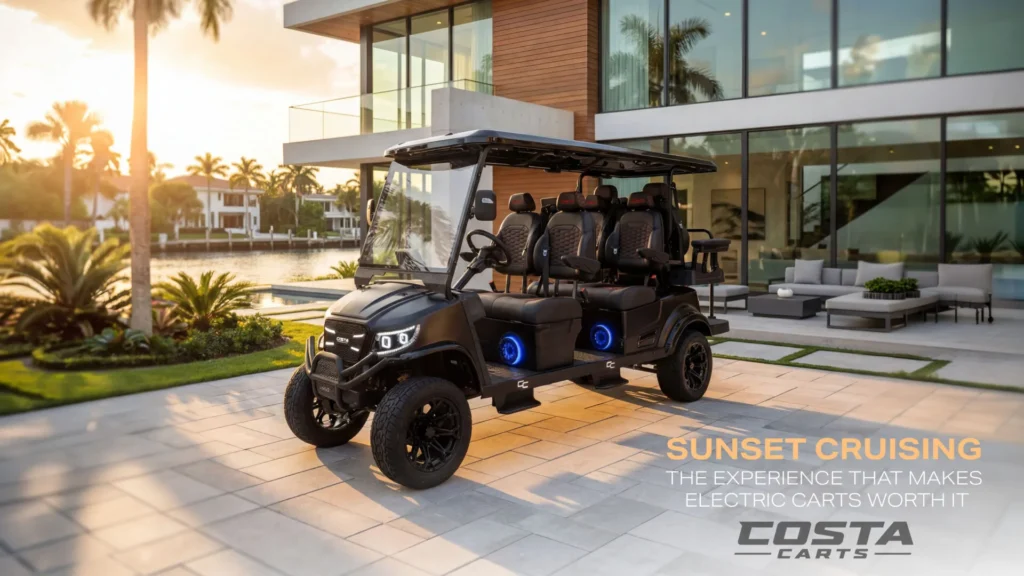
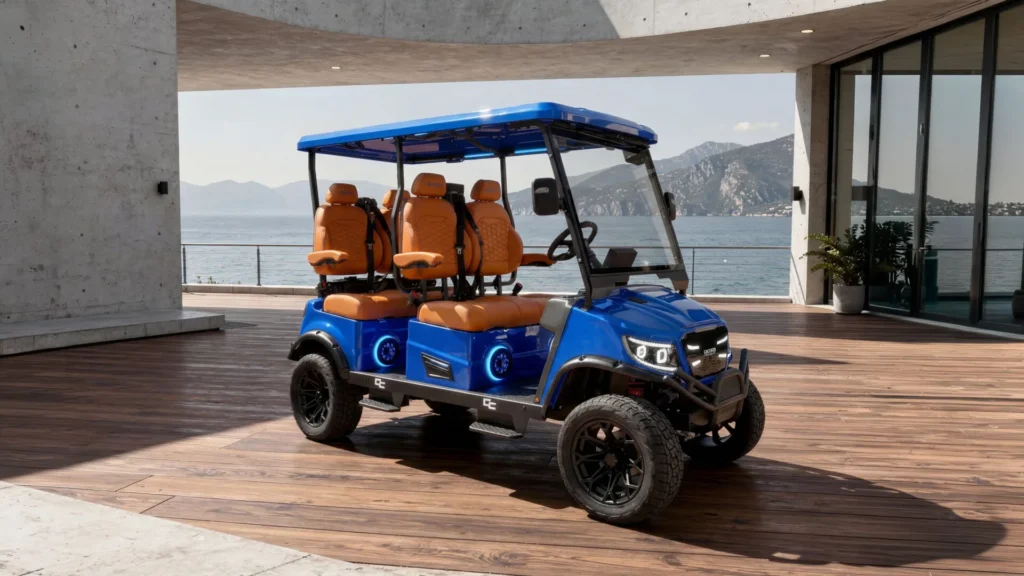
Costa Carts exists at the intersection of all of this — a product built for people who’ve decided they want the experience, not just the utility, and who understand that the vehicle you choose reflects something about the life you’re building.
People Also Ask
Why are street-legal golf carts becoming more popular?
A combination of improved battery technology, expanded LSV road access, rising car ownership costs, and growing demand for lifestyle-oriented community living has accelerated golf cart adoption significantly over the past decade.
What makes a golf cart street legal?
Street-legal golf carts, classified as Low Speed Vehicles, must have headlights, brake lights, turn signals, mirrors, windshield, seatbelts, a VIN, registration, and insurance to operate on public roads posted at 35 mph or below.
Are golf carts allowed in residential neighborhoods in Florida?
Yes, on roads posted at 35 mph or below where local ordinances permit. Florida has been progressive in expanding LSV access, and many communities have built infrastructure specifically to support golf cart use.
How far can a modern street-legal golf cart travel?
Lithium-powered models like the Costa Carts 400LF offer up to 100 miles of range per charge — more than sufficient for daily community and lifestyle use between charges.
Are golf carts a good investment for community living?
For residents in cart-friendly communities, yes. Lower operating costs than a second car, minimal maintenance, and the daily lifestyle benefits of easy local transportation make a quality electric cart a sound long-term investment.
What communities in Florida are best for golf cart living?
Florida has numerous cart-friendly communities, particularly along the coasts, in retirement communities, and in master-planned developments. Look for communities with LSV-compatible road networks, dedicated cart paths, and HOA rules that support cart use.
Recent Posts
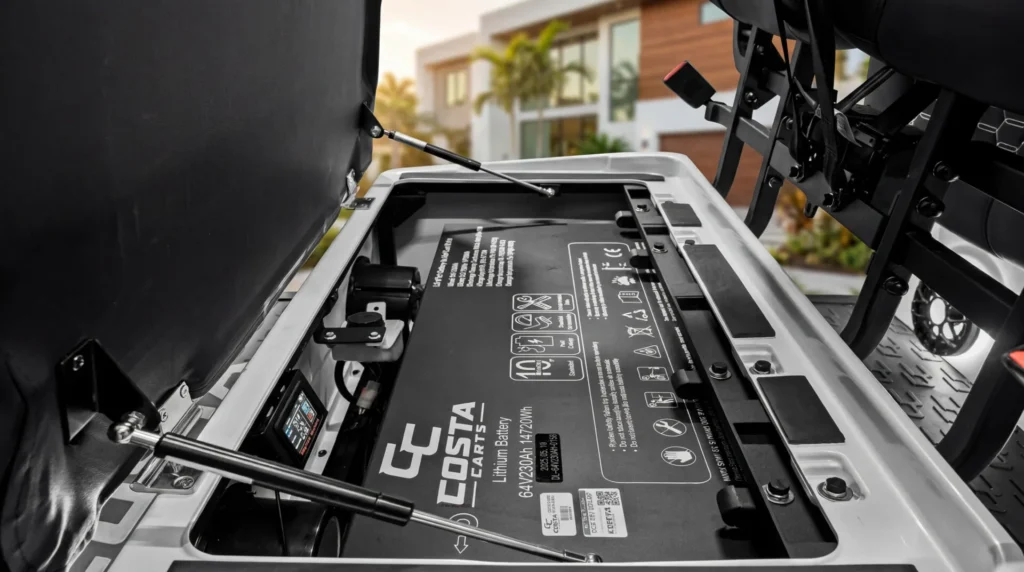
Range Anxiety Isn’t What You Think: How Far Modern Golf Carts Really Go
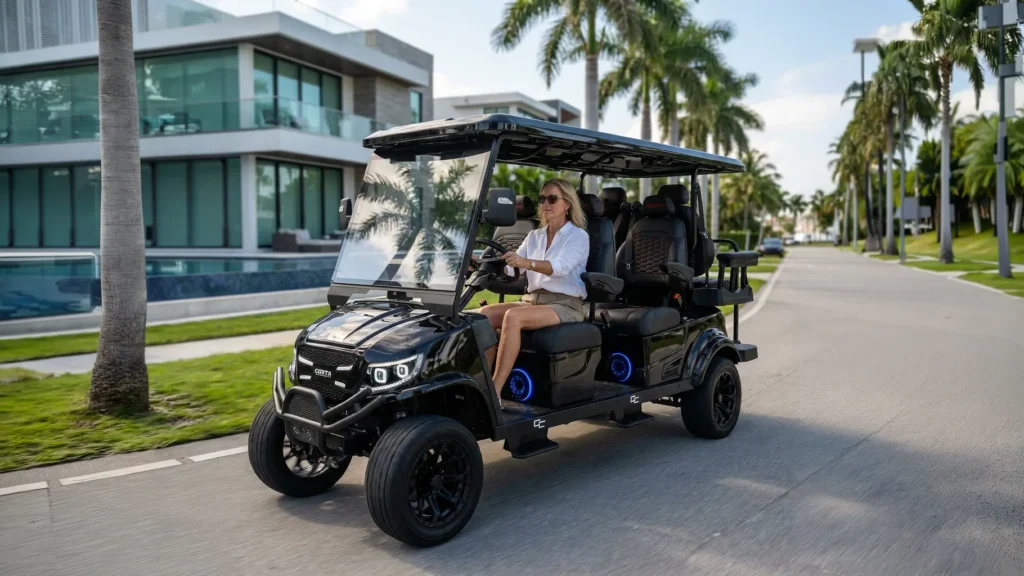
Are Golf Carts the Future of Neighborhood Transportation?
The Rise of Street-Legal Golf Carts in Modern Communities
Sunset Cruising: The Experience That Makes Electric Carts Worth It
Weekend Freedom: How a Costa Cart Changes Your Routine